As ever, these images are reduced in file size (quality) in order to help speed your download times, but much better quality copies are available!
(Reading some of the following blurb will allow a bit of extra time for the images to load.)
Apart from Peter's very unpleasant trip from Padstow to Falmouth towards the end of 2008, we've not had a sailing trip since 2007 and were very much looking forward to sailing in Turkey. We had decided that the Greek Islands are far too crowded (mainly with flotilas of chartered yachts) nowadays, and Sardinia and Sicily suffered with a lack of wind, and that Turkey potentially offered the advantages of being less crowded and having more dependable winds.
And so it proved to be. Although there were plenty of Gulets (traditional broad-beamed wooden coastal sailing vessels) to be found, with their professional (?) crews and fare-paying passengers, we only (briefly) encountered a couple of flotilas. Sailing and sea conditions were almost ideal, although we did have one day of complete calm and glassy sea. There were also a couple of days where the wind was up around 30 knots, with sea conditions to match!
The scenery is absolutely beautiful, the people are extremely friendly and hospitable, and the food was delicious. Fish dishes tend to be expensive, which is surprising as the fish has usually been caught locally that day. It is often sold by weight, so care must be taken when ordering at a restaurant. Mind you, most of the restaurants at which we ate were not much more than a small isolated building in its own bay, with its own pontoon. The welcome and food they offered were, without exception, outstanding.
If you would like to skip the photographs of Ephesus, and go straight to the sailing photographs, please click HERE.
We arrived in Bodrum an hour late (courtesy Fly Thomas Cook) which didn't give a great deal of time for the charter company to hand-over the yacht to us, and for us to do the usual 'admin' with them. In addition, we were keen to try and organise a trip to Ephesus for the following day. Efes was an ancient Greek city on the west coast of Anatolia, near present day Selçuk, Izmir province and is within reasonable striking distance from Bodrum. Our alternatives were to effectively lose a day's sailing and take a coach trip on the Wednesday, or to swallow the additional expense and hire our own guide, with car and driver, on the Tuesday. Not wishing to miss more sailing than we could avoid, and not being that keen on sitting on a coach whilst it went from hotel to hotel picking up passengers, we agree to meet our private guide and car at 0730 on Tuesday just outside the marina.
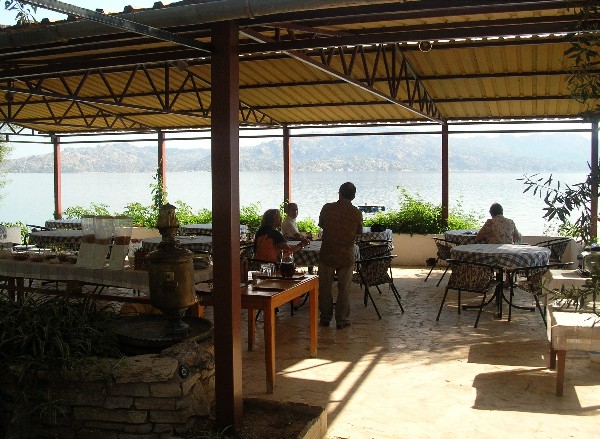
In total, the drive to Ephesus is about 2.5 hours, but we stopped after about an hour for a typical Turkish breakfast beside an idealic fresh water lake. The lake is now subject to strict non-polution laws, thereby protecting its environment. Apparently it has a wide variety of birds, fish and other wild life, some of which are unique to the lake. The following pictures convey (I hope) the peace, tranquility and cool shady temperature. The day was already feeling pretty hot!
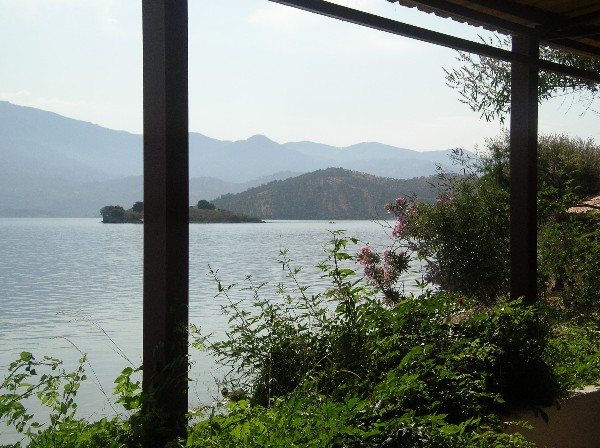
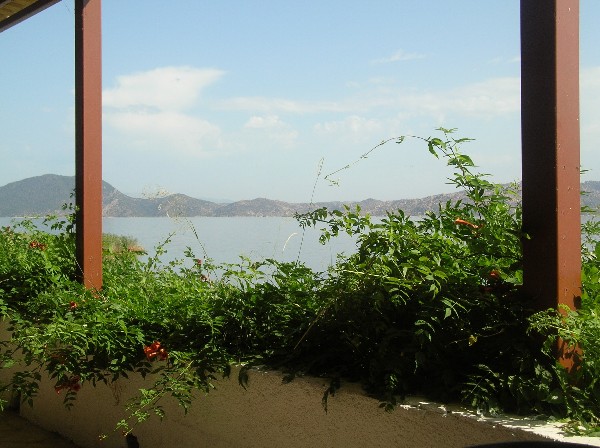
The breakfast was very welcome indeed - both refreshing and filling.
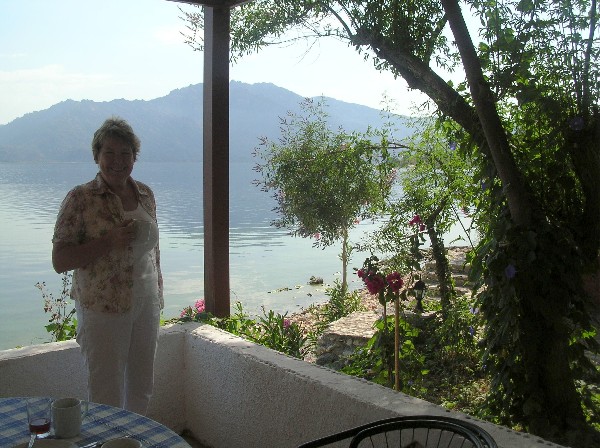
Although quite reluctant to leave such a lovely spot and climb back up the hill to the hot car and continue our journey, we were looking forward to reaching Ephesus - still a distance away. It is, of course, a major tourist attraction and the number of tourist coaches on the roads increased dramatically the closer we got to the site. Fortunately, being in a car and therefore less regimented than were the coaches, we'd soon parked and our guide had quickly arranged for our tickets. By now the sun was beating down, and it was clear that shade would be at a premium. We had to run the gauntlet of walking past numerous stall-holders desperate to sell from their vast array of sun hats etc, even though we were already wearing our own hats!
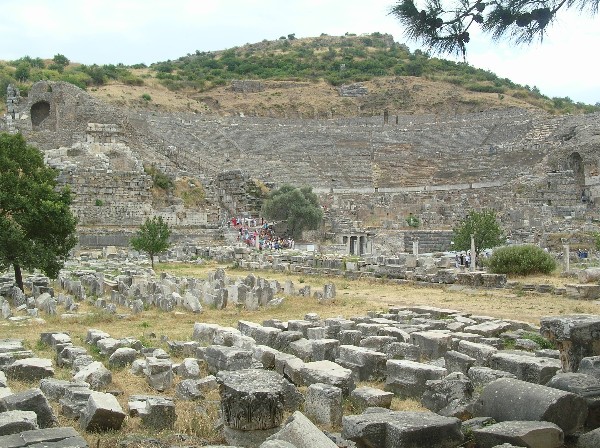
The vast city was built on a hill side, sloping down to the sea shore and harbour. It was a very important trading port, but gradually the silt built up so much that the sea is now a distance away, and Ephesus is left looking out across a dry, flat plain. The tourist entrance is at the highest point, and one of the first sights as one enters is this amphitheatre which is quite impressive but, as one later discovers, is actually just a small taster of what is to follow.
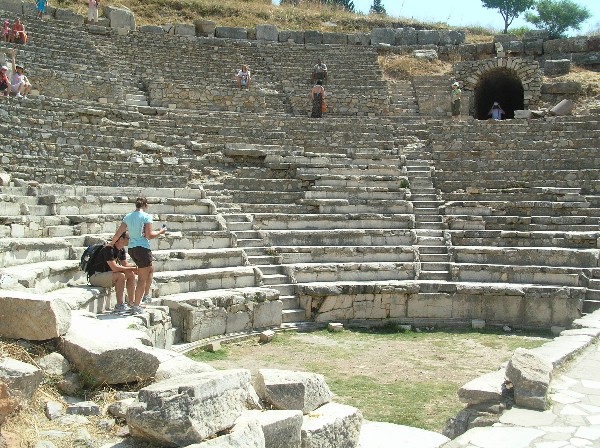
Initially, the site appears a little cluttered and without any particular order, but with the assistance of an experienced guide one soon discovers the significance of one's surroundings.
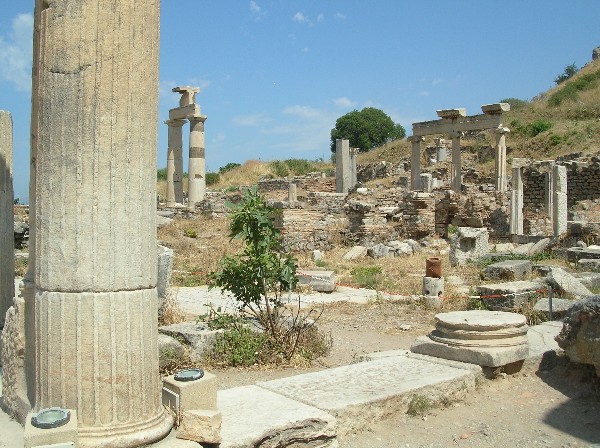
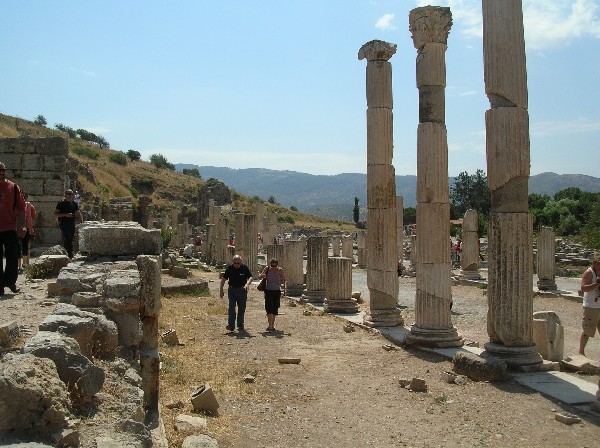
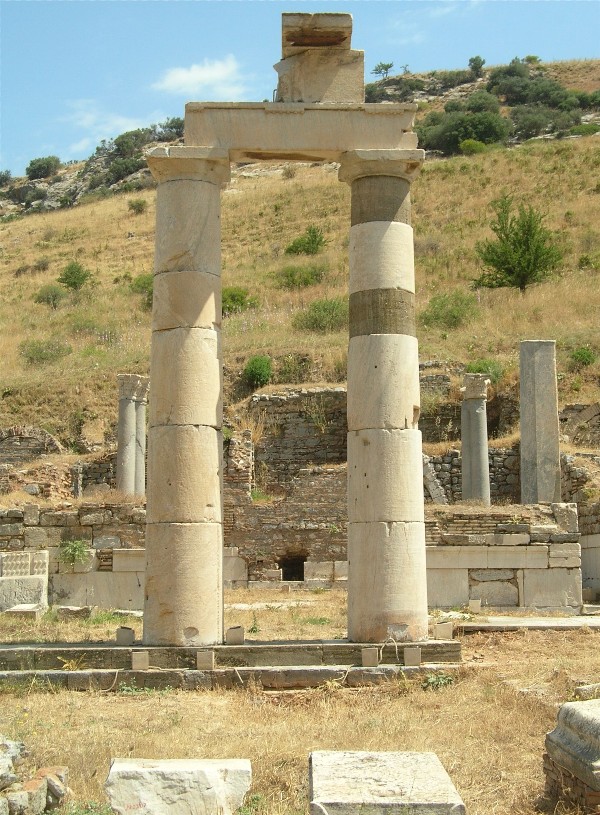
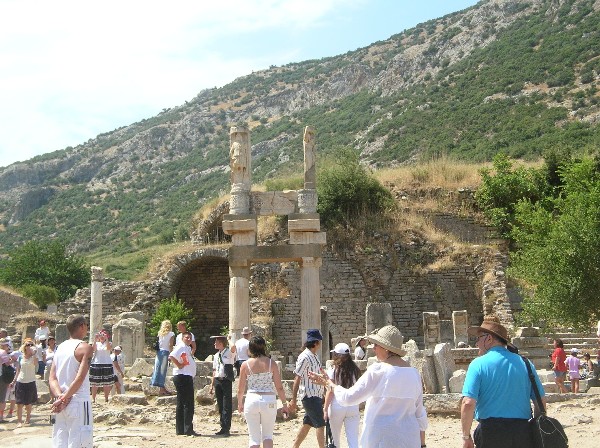
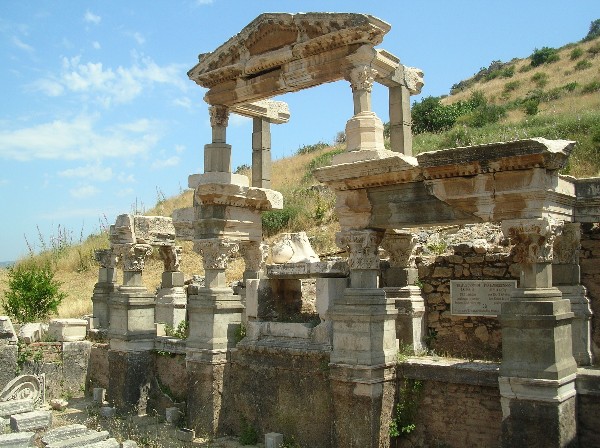
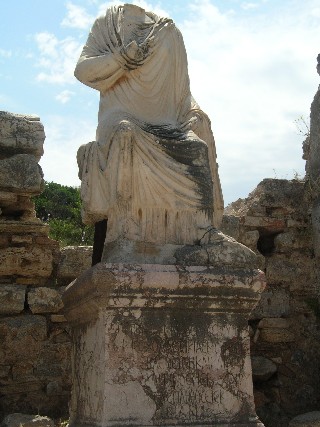
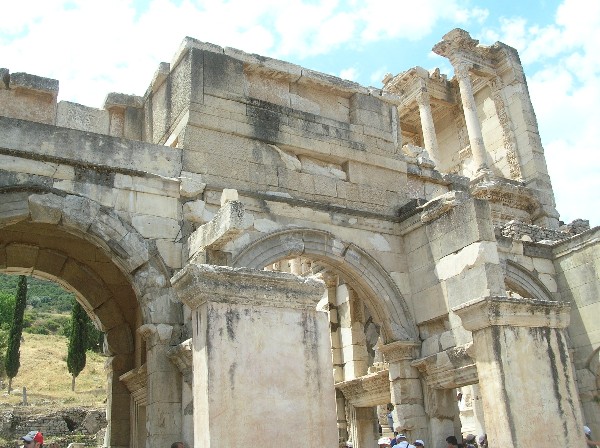
Some of what you see (eg below) is being, or has been restored, and in some cases the original stonework can be found in museums elsewhere.
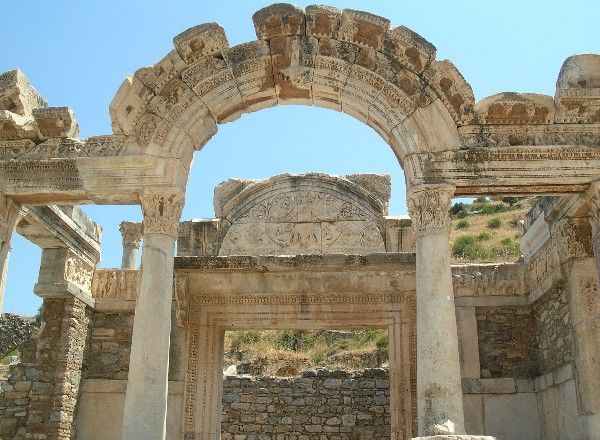
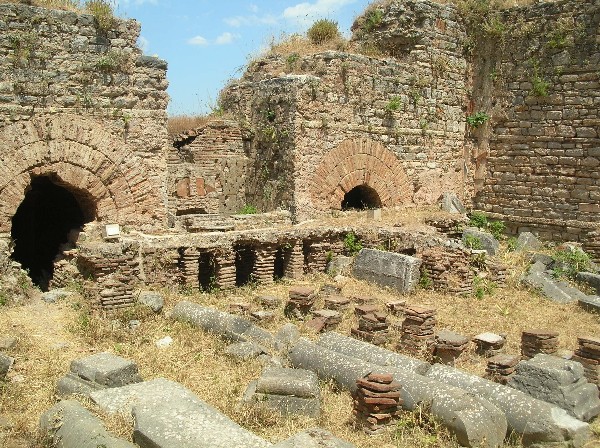
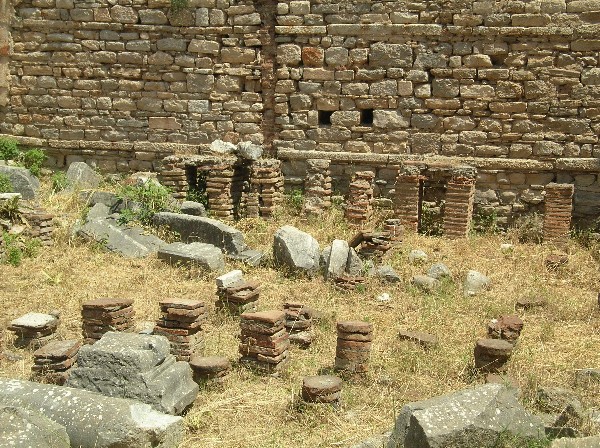
The following four photographs are of the 'bathing' area - a hot pool, a tepid pool and a cold pool.
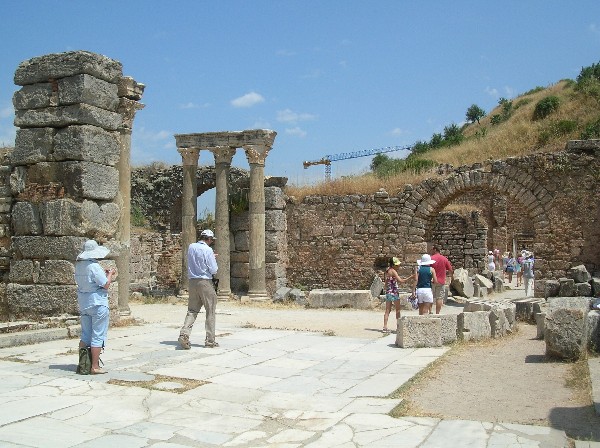
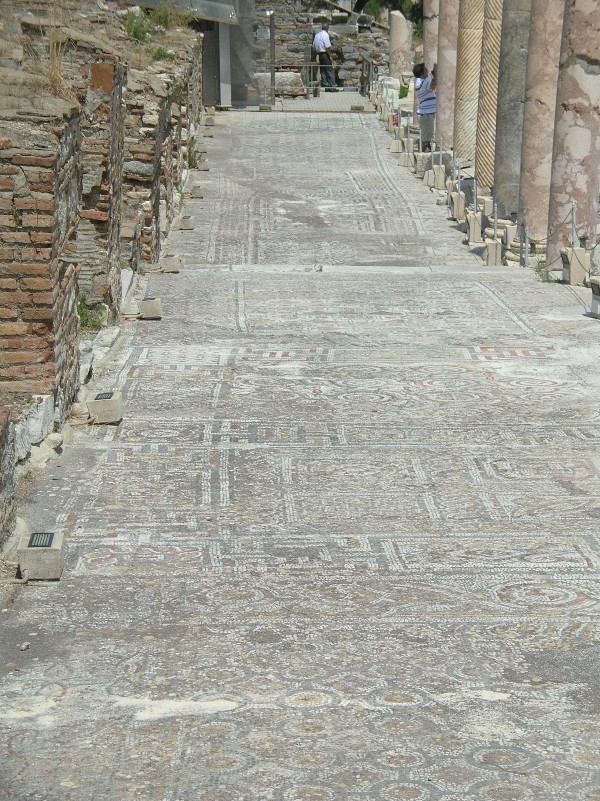
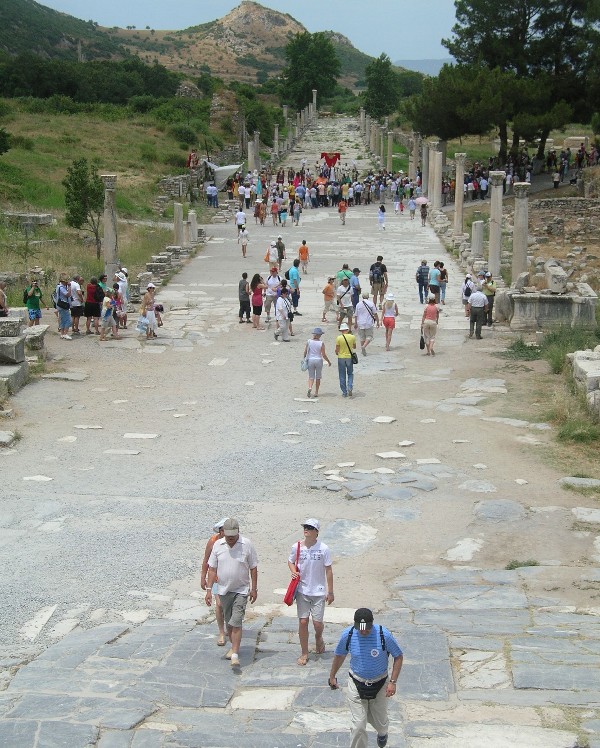
One soon begins to realise the true scale of the city - particularly when told that only 15% of it is currently visible and accessible, the rest still buried under sand and soil! Work continues to recover as much as possible, but it is an enormous task. These three photographs show the continuation of the street down which we have been walking. It is now more obviously the 'main' street and (interestingly) this lower part was pedestrianised, which only goes to show how slow we have been to catch on to the idea in our 'modern' age. A little further down, the remains of shops and arcades can clearly be seen. The remains of the houses continue up the hillside on each side of the main street, but these have not (so far) been recovered and are not accessible by the public.
The photographs also show just how crowded with tourists the site is, but there is no choice but to try and ignore them and their jostling cameras.
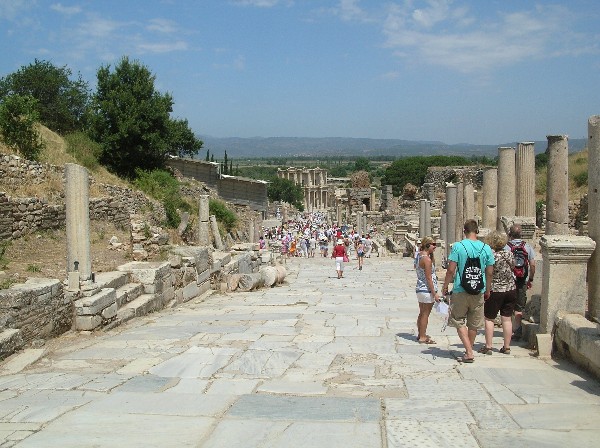
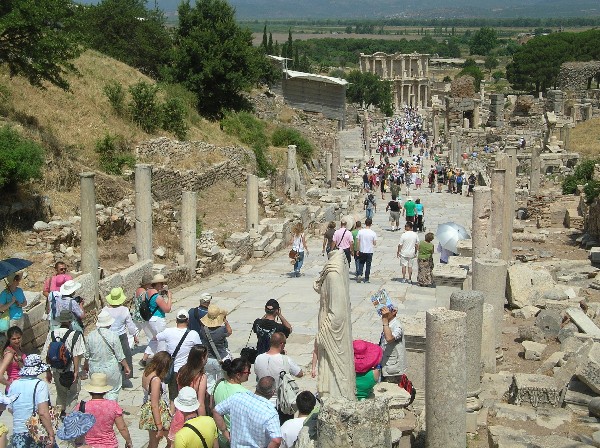
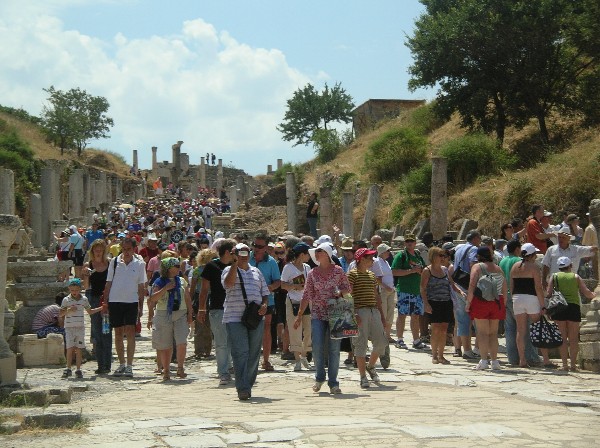
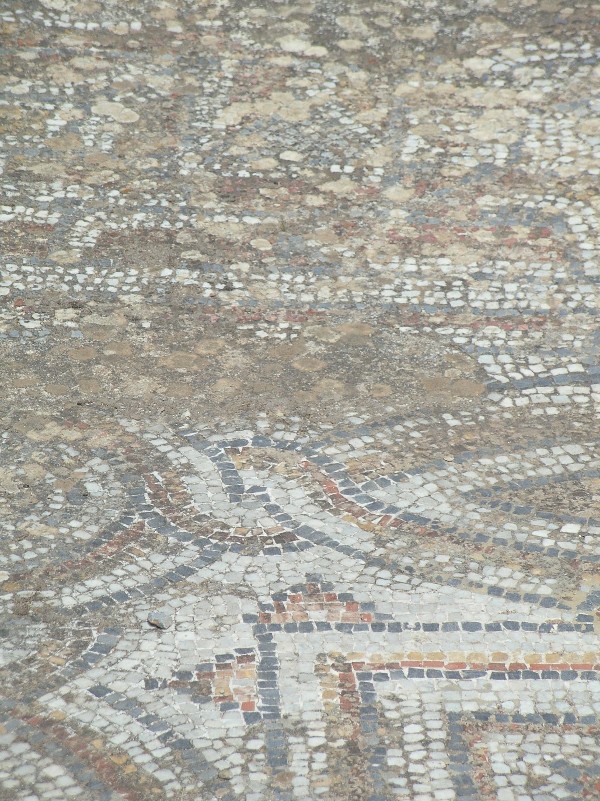
Do we have pavements as ornate as this?
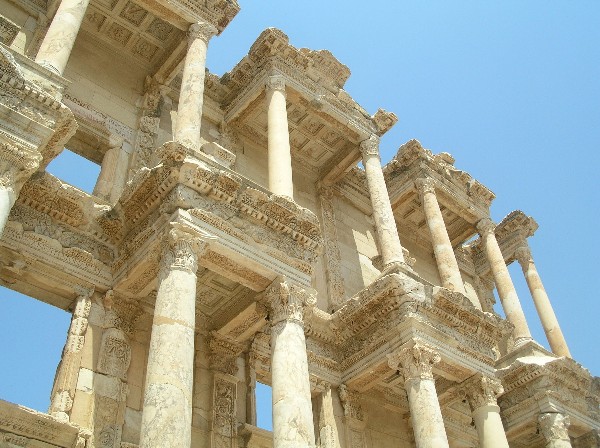
At the bottom the main street is the library building, or at least its facade. Very impressive indeed.
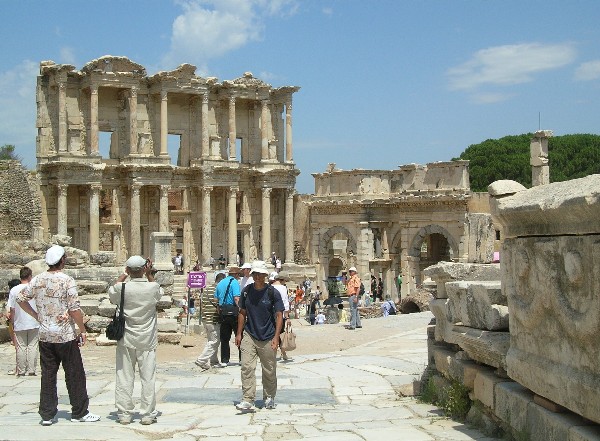
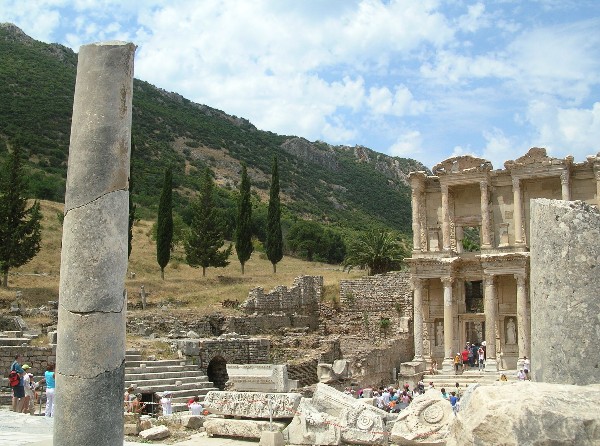
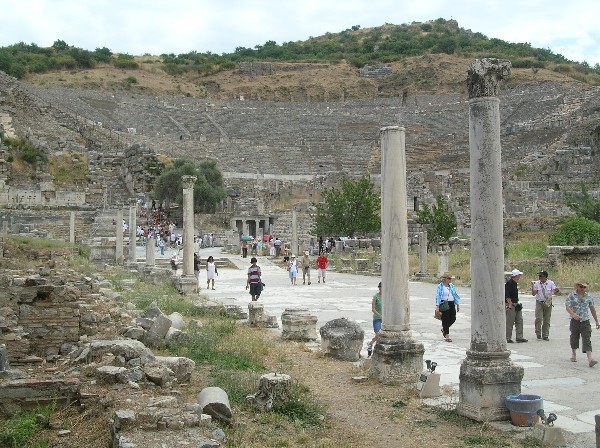
A short step from the Library is the main amphitheatre. First constructed in the Hellenistic period, it is thought to have been the largest outdoor theatre in the ancient world. It is vast!
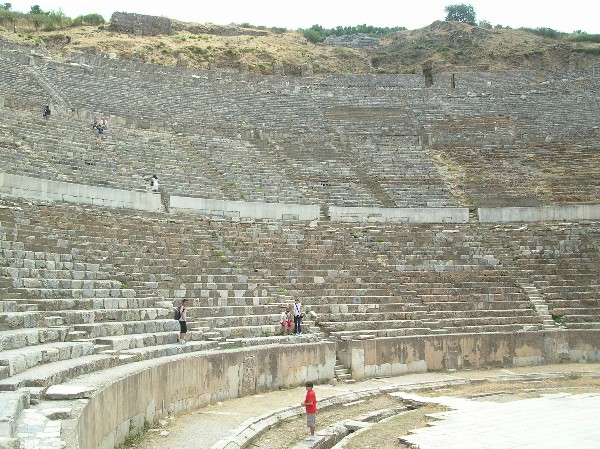
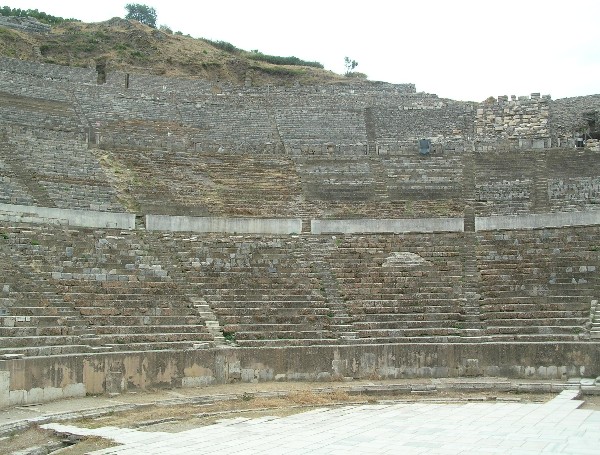
The following picture shows what remains of the stage area. Modern day concerts have been staged in the amphitheatre, but (I believe) have now been stopped to prevent the possibility of further damage to the amphitheatre's structure.
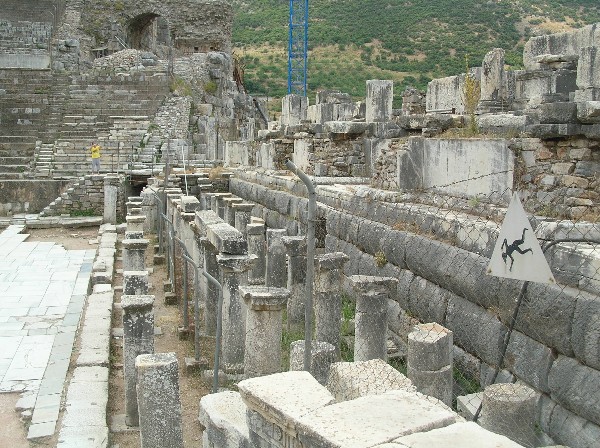
This photograph may give a better indication just how big it is.
Standing at the entrance to the amphitheatre, one can look along the 'road' (lit by oil lamps at night) leading to the site of the harbour.
Imagine having just arrived by sea, and making one's way into Ephesus for the first time. It is no accident that the amphitheatre is the first thing you would have seen, and you were meant to be impressed!
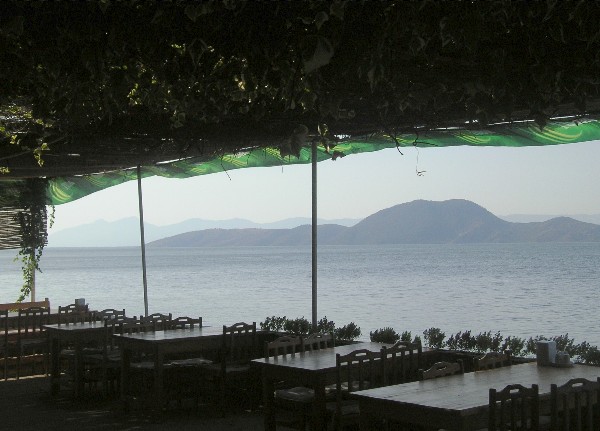
Just had we had at breakfast time, we broke the journey beside the same freshwater lake and enjoyed a much needed refreshing drink of tea. It was a slightly different location, but the surroundings were equally beautiful and peaceful.
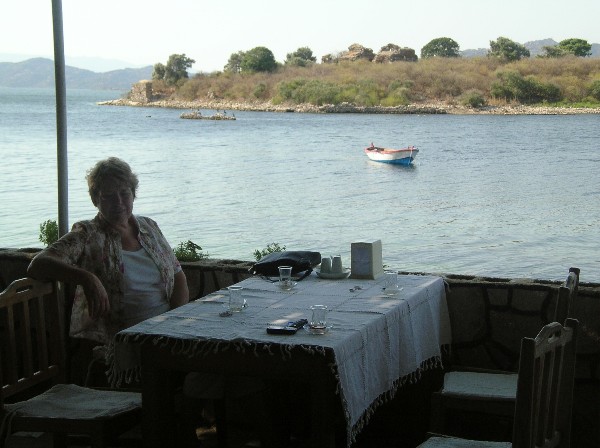
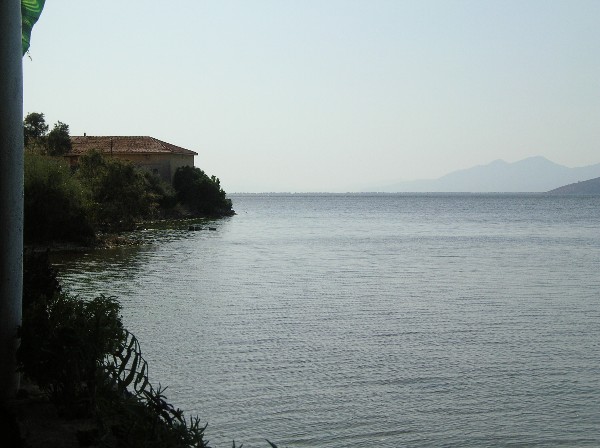
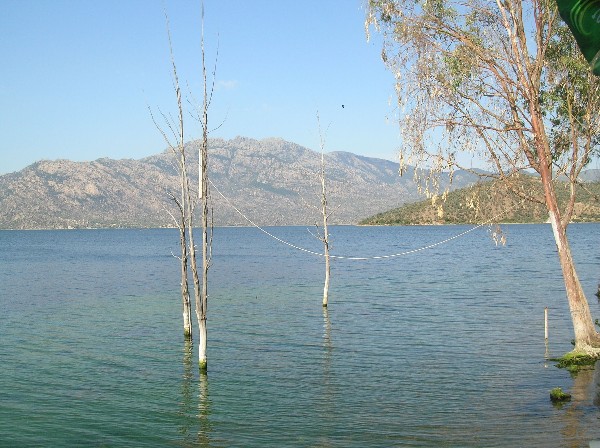
We'd had a long hot day, but Ephesus is not to be missed. That so much of the original city remains - and keep in mind the 85% not yet revealed - is truly remarkable.
We had achieved our wish to make the visit on our first day in Turkey, thus keeping the remainder of our time for Marut, and the sailing.
Please click on this link to see the sailing photographs.